Posts

Showing posts with the label Copperhead Translocation

It's that time of year again — Copperheads!

Image
(photography by Miranda Swaim of Blue Heron Nature Preserve) Last week, I got a call on the early side of the morning. It was Miranda from Blue Heron Nature Preserve (our partner and landlord). She relayed a message from the DaVinci International School (also in the same building with us) that there was a snake just off their back deck and were worried it was a Copperhead! Through our calls with the Copperhead Rescue & Advocacy Program, we know that only 6% of our calls are actually Copperheads, but seeing as little kids were involved and I was right upstairs, I went down to check it out. The school took all of the children indoors and as I made my way outside to get a look at the snake, I was amazed. Not only was it indeed a Copperhead, but it was in the most striking (meaning beautiful, not 'striking' at my face or anything) pose I had ever seen! An adult Copperhead ( Agkistrodon contortrix ) several feet above the ground in a blooming azalea. What a sight t...
Myths about Cottonmouths

Image
COTTONMOUTH VIDEO UNDERCUTS MYTH Cottonmouth in a south Georgia stream (Matt Moore) By MATT MOORE Judging by comments at public education programs I’ve done, cottonmouths are the most misunderstood and maligned of Georgia's six native species of venomous snakes. I have worked in close proximity with many   cottonmouths (aka water moccasins)   over the years and I encounter dozens each year in the south Georgia swamps where I conduct wetland field work. Yet I’ve never had a cottonmouth chase me – a prominent myth concerning this species – or try to bite me. Earlier this month while wading in a narrow, shallow stream in a south Georgia swamp, I met a large eastern cottonmouth – approximately 4 feet long – swimming upstream.   My video of the encounter   shows the snake's initial curiosity as it tries to figure out what this large obstruction in its path is. After deciding that I’m an animate object and thus a potential predator, the snake decides to avoid ...

‘Coppie’ our ambassador for Copperhead conservation ...

Image
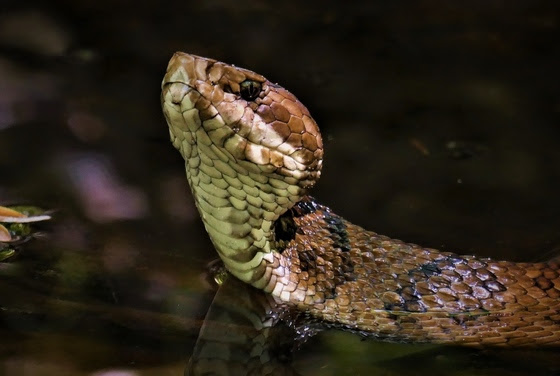
via Instagram http://ift.tt/2hLqLtC  must have been bored with me trying to photograph him. What might look like an act of fangy aggression, is actually just him yawning. Copperheads, and all snakes are here for a reason! They are fulfilling an important role in our ecosystem, and they just want to be left alone so they can do it. It’s your right to kill any snake on your property, but we urge people to use our Translocation Program as an alternative to killing the snake. If you choose to exercise your right to kill snakes on your property, you then relinquish your right to complain about rodent infestations and lime disease, both of which are controlled naturally by snakes. So far, 3 of the 31 calls we have received have actually been Copperheads. The majority have been Water Snakes (Nerodia sp.) and Brown Snakes (Storeria decayi). Often we are sent pictures of these poor harmless snakes with their heads already cut off. No doubt, snakes freak people out — but they are fascina...

At The #AmphibianFoundation we are also big fans of our friends a little further up the phylogenetic tree.

Image
 Especially, the reptiles with particularly ‘bad raps’ like Copperheads and Snapping Turtles. You know, animals that the average person loves to hate — and oftentimes — kill. Admittedly, baby Copperheads are snippy and beautiful. Luckily, copperhead venom is not very potent and deaths from copperhead bites are exceedingly rare. Most snake bites occur when someone tries to kill or harass a snake, so the best way to avoid a bite is to leave any snake you find alone. (from the SREL site) This particular hatchling Copperhead was found at The Atlanta History Center, which has recently switch from a ‘zero-tolerance’ kill policy to a translocation program initiated by The Amphibian Foundation. We will come and move your Atlanta Copperhead to a location outside the perimeter we have worked out with GA DNR. Recent studies indicate that translocating a reptile (particularly an adult) increases its chance of mortality by 70%, but compared to 100% death by getting its head cut off — we’ll ta...