Posts

Showing posts with the label conservatory

A beautiful #Bijagual variety of Red-eyed Leaf Frog, Agalychnis callidryas in the conservatory.

Image
370 of these frogs were released back in November and have now grown enough to begin reproducing! These frogs were donated through a partnership with California State University’s Department of Biology. via Instagram http://ift.tt/2beIBAE

#‎Phantasmal‬ ‪#‎PoisonFrog‬ Epipedobates tricolor in the ‪#‎FuquaConservatory‬

Image
via Instagram http://ift.tt/2aSn5UQ One of the first things (and ultimately one of my favorite things) about the conservatory is this healthy and vital population of ‪#‎Morispunga‬ tricolors. One can observe them in this semi-natural setting 365 days a year, but they are most active during the mornings after the conservatory has been watered heavily. Look to see if the pathway is wet - if so then you should have no trouble hearing the calls of advertising male frogs, trying to woo females. If you look hard enough, you can find male frogs guarding the eggs, which are often deposited on the horizontal portion of leaves within a couple of feet from the ground. Once the eggs hatch, he will carry them on his back to one of the 7 little wetlands inside the conservatory. This atypical parental care behavior is actually common in the family of Poison Frogs -‪#‎Dendrobatidae‬ ‪ #‎Epipedobatestricolor‬ ‪#‎AmphibianConservation‬‪#‎AmphibianConservationProgram‬ ‪#‎FrogsNeedOurHelp‬‪#‎Salama...

Red-eyed Leaf Frog eggs in the Conservatory!

Image
I didn't think it was possible, but the #FuquaConservatory got a little bit cooler this weekend with the successful spawning of Red-eyed Leaf Frogs. Pictured here are the two halves of the clutch, deposited on two different large-leaved #aroids in the turtle pond. The eggs are developing so stay tuned for updates on this momentous reproductive event! Late last year, through a partnership with California State University, we released 370 Agalychnis callidryas into the #TropicalRotunda ... these Red-eyed #LeafFrogs are from two different localities in #CostaRica (#LaSelva and #Bijagual) and we will have to wait until the tadpoles metamorphose before we will know which variety have spawned.

Phantasmal Poison Frog, Epipedobates tricolor from #Ecuador.

Image
This is the most conspicuous species of the four which live free-range in the Fuqua Conservatory. Their calls permeate the tropical rotunda during the day, and with enough patience you can often spot them transporting their eggs from the deposition site to the water.

A Grand Day with Leslie, Amphibian Specialist @ the Garden

Image
Leslie Phillips, Amphibian Keeper at the Garden, with a newly hatched Eleutherodactylus coqui  We had particularly great luck finding frogs yesterday while giving a tour of the Fuqua Conservatory to the Development Team at the Garden. The timing was perfect as a clutch of Coqui eggs was hatching right before our eyes! Coqui, and frogs of the genus Eleutherodactylus are direct developers , meaning the eggs develop directly into froglets and the tadpole stage is skipped. This allows the frogs to lay their eggs anywhere with a little moisture and there is no need for standing water. We were able to find both varieties of Red-eyed Leaf Frog, Agalychnis callidryas . The Bijagual form, with maroon eyes and orange stripes on the flanks, and the La Selva form with red eyes, and purple/blue stripes. Later that day, we went to the Atlanta History Center where we are consulting with them on constructing an ephemeral wetland on their property. We found Two-lined Salamanders (o...

#Eleutherodactylus #coqui in the #Fuqua Conservatory of the Atlanta Botanical Garden.

Image
Typically, it has to be dark to see this #nocturnal species but I got lucky. A beautiful frog, the conservatory is quite loud at night with the sound of their advertisement calls. A call which has been described as a 'co-QUI'

#Bijagual Red-eyed Leaf Frog, #Agalychnis callidryas climbing the aerial roots of a Cissus plant in the #Conservatory.

Image
via Instagram http://ift.tt/1TOCsIn

Wonderful Behind-the-Scenes Tours and Collaborative Discussions Today in Amphibian Conservation

Image
I had the privilege today of meeting with two groups and talking about amphibian conservation, our program and ways to collaborate to get the word out about amphibian declines by getting our community involved! First, I met with Aaron and Cleo from #weloveatl, a native metro Atlanta social phenomenon. I met Aaron and Cleo when he and I both gave talks at the TEDx conference in April at GA Tech. I have been looking forward to meeting with them to discuss uniting the Garden and our Amphibian Conservation Program with the enthusiasm of his #weloveatl community. Aaron (one of the founders of #weloveatl) and Cleo outside of the frogPOD. I had a wonderful visit with them today. Secondly, I met with some of the Garden staff from the Advancement and Development teams, and showed them around our amphibian conservation collections. Unfortunately, we don't often get to spend time with member of other departments, and I was grateful that that took me up on my offer to show them some of...

Parental care in Epipedobates tricolor, the Phantasmal Poison Frog. Tadpole transport to the puddle

Image

Coqui calling in the conservatory (Eleutherodactylus coqui)

Image

Puerto Rican Coqui — tiny frogs emerge directly from the eggs!

Image
Eleutherodactylus coqui emerging from their eggs. Coqui are direct developers and as you can see here, hatch out as little frogs, skipping the tadpole stage altogether. This series was taken in the Fuqua Conservatory

Me with the Conservatory resident Alligator Snapping Turtle, Macrochelys

Image

Epipedobates tricolor, the Phantasmal Poison Frog from Ecuador in the Conservatory

Image
via Instagram http://ift.tt/1BMpvYJ

Coqui, Eleutherodactylus coqui from Puerto Rico. Developing eggs being guarded by parent.

Image
via Instagram http://ift.tt/1F6JKUP

Coqui in the Conservatory today, guarding eggs

Image
via Instagram http://ift.tt/1E0hOBF

Field Guide to the Amphibians and Reptiles of the Conservatory

Image
Finally! A guide to all the amazing animals in the Fuqua Conservatory and Orchid Center . There are many species of frog, lizard, turtle and bird and they are all included in this soft-cover field guide. You can download a PDF for free here .

Agalychnis callidryas, Red-eye Leaf Frog, a new species addition to the conservatory!

Image
via Instagram http://ift.tt/1zukaTQ

Day Geckos in the Conservatory!

Image
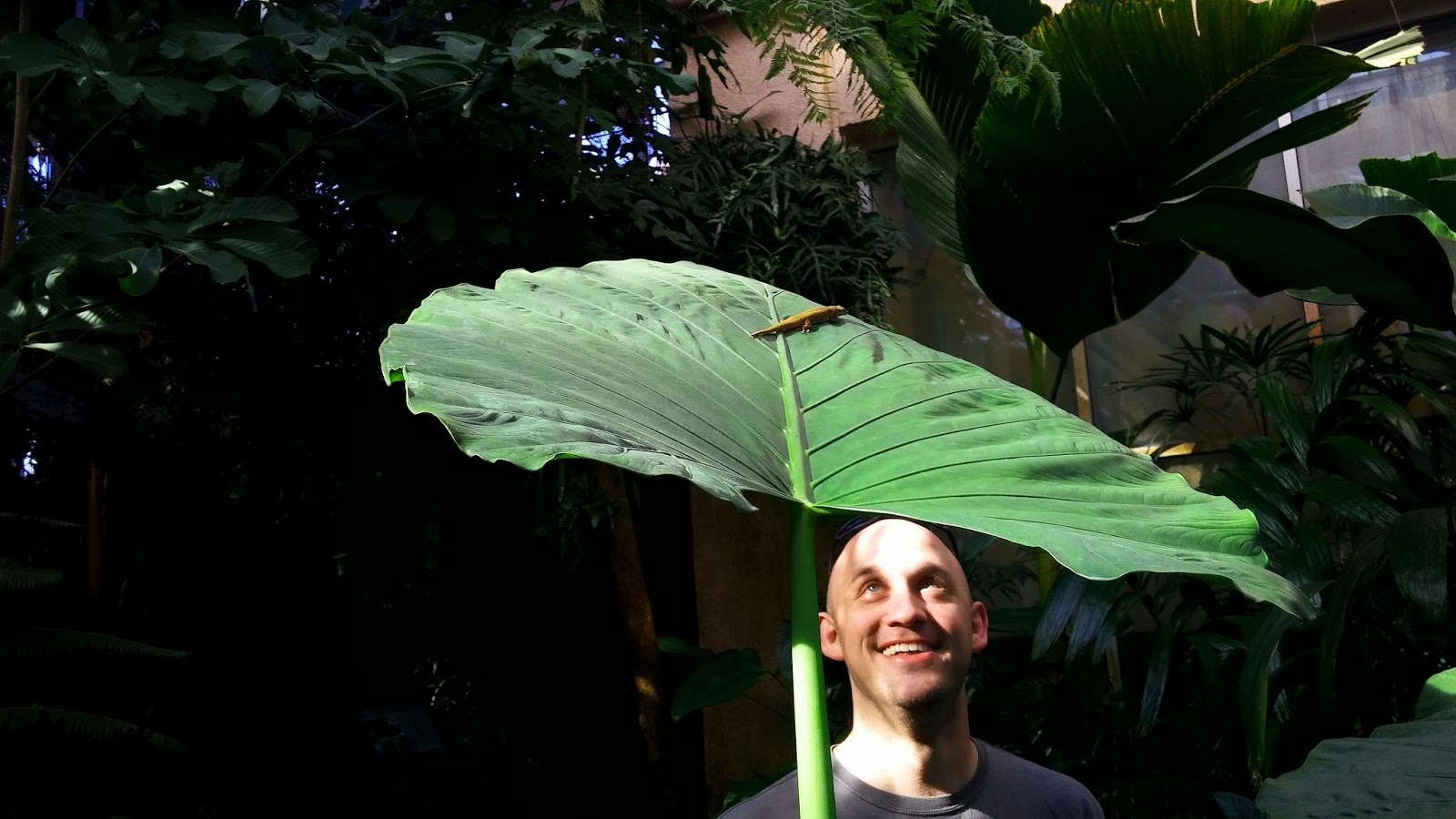
Adam Jessien, a local Phelsuma breeder and owner of Adam's Geckos donated some beautiful Day Geckos to the Conservatory Phelsuma abbotti chekei perched on a leaf The shadow of Phelsuma abbotti chekei Adam releasing a juvenile Gold Dust Gecko ( Phelsuma laticauda ) Gold Dust Day Geckos are a small and quite beautiful species.

Reptiles @ The Garden ...

Image
Five-lined skinks,  Plestiodon fasciatus are common throughout the Garden ... particularly the Parterre Garden Two issues of ' Clippings ' ago ... we featured Reptiles in the Rotunda — highlighting some of the reptilian species lurking in the trop house and conservatory. There are many reptile species in the conservatory. The orchid center, including the high elevation house, orchid house and atrium also provide refuge for many native and non-native reptile species. In this post we feature some of the scaly critters here as well as some of the folks that love them.... Amphibian Specialist, Leslie Philips and Conservatory Director, Ron Determann checking out some new hatchling turtles Ron inspecting Carmine, our conservatory resident Alligator Snapper , who was being weighed while we cleaned out his pond Can you spot the Oustalet's Chameleon ( Furcifer oustaleti ) in this picture? (see below) There are a bunch of them in the conservatory and they are doin...

Exhibit Update ...

Image
One of our new exhibit animals ( Dendrobates tinctorius azureus ) donated by the Georgia Aquarium   These beautiful frogs are getting used to their new habitat in the Fuqua Conservatory lobby Weekend visitors looking for frogs after I told them there were 17 frogs and 4 tadpoles in this Costa Rica exhibit. There is a newly metamorphosed Lemur froglet in the center of the image. There are 11 critically endangered Lemur frogs ( Agalychnis lemur ) in the Costa Rica exhibit. Two of them (pictured above) are metamorphs, meaning they were recently tadpoles. Lemur frogs sleep under leaves — you can see how they would be impossible to find from the front of the exhibit. Here is a video of two of our adult Lemur frogs, in amplexus on exhibit. If you watch and listen closely, you can here the male (the one on her back) calling!