Posts

Showing posts with the label Pristimantis gaigei

Rain frogs ...

Image
A Rain frog ( Pristimantis gaigei ) — a rare appearance in the Panama exhibit. Although there are four of these frogs in exhibit, they prefer to hide in the shadows. All four species in view at once! From lower left Rain frog (P. gaigei) , Rocket frog ( Colostethus pratti ), Green spiny toad ( Incilius coniferus ) and Crowned tree frog ( Anotheca spinosa ) A clutch of Rain frog eggs in the frogPOD That same clutch of Rain frog eggs, much further along in development.  Rain frogs are direct developers and skip the tadpole stage Dante's fantastic image of a couple of developing Rain frog embryos still in the egg
Spring in the Conservatory

Image
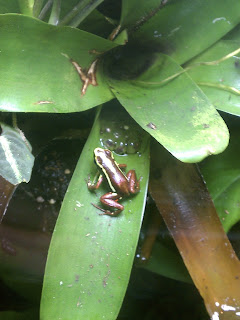
Male Phantasmal poison frog | Epipedobates tricolor , guarding a clutch of eggs This weekend was on the colder side, and it was pretty quiet in the mornings. Peaceful times like these are perfect to see the amphibians on exhibit and throughout the Conservatory engaging in behaviors they are too shy to exhibit when there are a lot of people around. If you ever make it to the Garden just after opening, I would suggest bringing a small flashlight (if you would like to maximize the chance of seeing some interesting amphibian activities) Rain frog | Pristimantis gaigei , in amplexus The resident quail and our Central American box turtles ( Rhinoclemmys ) sharing breakfast Our Gopher frog Head Start tadpole rearing setup Fringed leaf frog | Cruziohyla craspedopus , in amplexus 3 of the 4 Rain frogs were out all weekend, usually one can see zero   Inside of ferns is a good place to look for Poison frogs in the Conservatory

Species Spotlight: Gaige's rain frog

Image
There are so many more amphibians in our Frogs of Panama exhibit than any other at the Garden. In fact, we started with just over 20 adult frogs (3 Anotheca spinosa , 4 Incilius coniferus , 4 Pristimantis gaigei and 10 Colostethus pratti ), and since then, at least 2 of these Panamanian species have reproduced in the exhibit! Every morning the calls of male Rocket frogs ( Colostethus ) can be heard as they woo prospective mates. The males can also be seen competing for territory in typical poison frog fashion if you watch closely and stay very still. Although Rocket frogs are technically in the family of 'poison frogs', they seem to rely more on their quickness (they are called 'rocket frogs', after all) and their cryptic coloration, rather than being brightly colored, as is typical with their poison frog relatives. Pristimantis gaigei | Gaige's rain frog — breeding in the Frogs of Panama exhibit Last Tuesday, I noticed a pair of adult Rain frogs ( Pri...