Posts

Showing posts with the label Phyllobates bicolor

A Nice Overview of the Toxicity of Poison Frogs, and Poison Dart Frogs

Image
This interesting article summarizes some of the recent toxicity work from Dr Jason Brown, as well as the work from Drs Chuck Myers and John Daly http://www.understoryenterprises.com/toxicity-of-poison-dart-frogs
Image
Bufo conifera | Green spiny toad perched all day. Sipaliwini morph of Dendrobates tinctorius | Dyeing poison frog 'The committee' of Phyllobates sp.

The Garden's Saturday Frog Feedings

Image
One of the Dendrobates tinctorius varieties we have in our Okipipi exhibit — the Azureus morph Every Saturday morning @ 11,  we host a frog feeding and informal talk where visitors of all ages are encouraged to attend. We have an assortment of bugs to offer the frogs in each exhibit, and an Amphibian Discovery Cart with materials and information about frogs; including information regarding some of the problems these animals are facing and why they need conservation programs such as ours. Most of the time, we get between 50 and 100 visitors during the event, and it's exciting to see so many amphibian enthusiasts! Our 2 Poison frog exhibits are popular with visitors as the frogs are active and not afraid to be watched.   Our Frogs of Panama exhibit has more frogs on display than any other, but it takes time to spot all 4 species. I like to start the talk with the Poison frogs , specifically our Phyllobates exhibit ' Colombia's Terrible Trio '...

Colombia's Terrible trio

Image
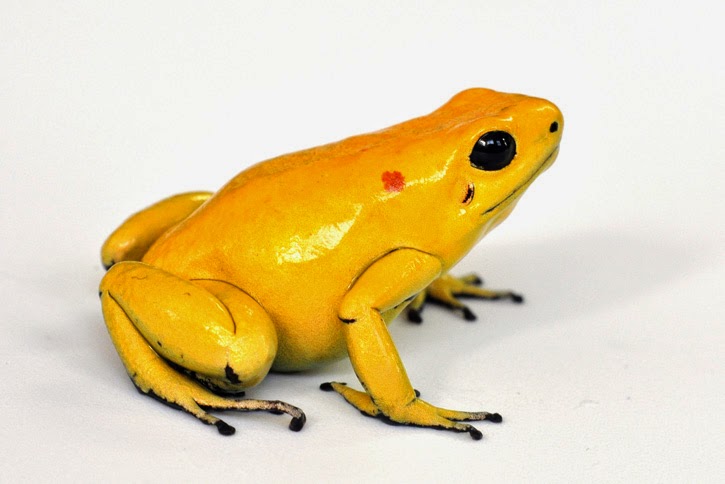
Deadly and Beautiful Phyllobates bicolor , one of the 3 Colombian species that are lethal to humans We had an incredible turnout for the 11 am Saturday frog feeding this week! No doubt, in part, due to the opening of Orchid Daze here in the Orchid Center . There was an especially large crowd gathered around at the ' Colombia's Terrible Trio ' display, featuring some of the most toxic animals on the planet! These frogs are always hungry! One important thing to note: the frogs are HARMLESS in captivity—Though I wouldn't recommend handling one! They get their poison from their specific diet in the wild. Here at the garden they are fed an assortment of small bugs, which keeps them healthy and happy, and fortunately for us—harmless. Phyllobates terribilis We wear gloves when handling them anyway, for their protection and ours. Come and check them out, these frogs are not shy!